
When we arrived in Struga, North Macedonia, we honestly didn’t know what to expect.
We had heard about Lake Ohrid and knew we wanted to explore the area, but we hadn’t realised how much we would love Struga.
We spent the majority of our month in North Macedonia based here, and by the time we left, Struga had become my favourite place we have visited on this trip.
traveling full-time as a family of five means we experience places differently from people passing through for a few days. We need somewhere that works for children, has enough to explore, feels safe, has good food, and allows us to settle into a slower pace.
Struga gave us all of that.
If you’re wondering whether Struga is worth visiting, especially as a family, this is everything we learned from spending a month here.
Where is Struga, North Macedonia?
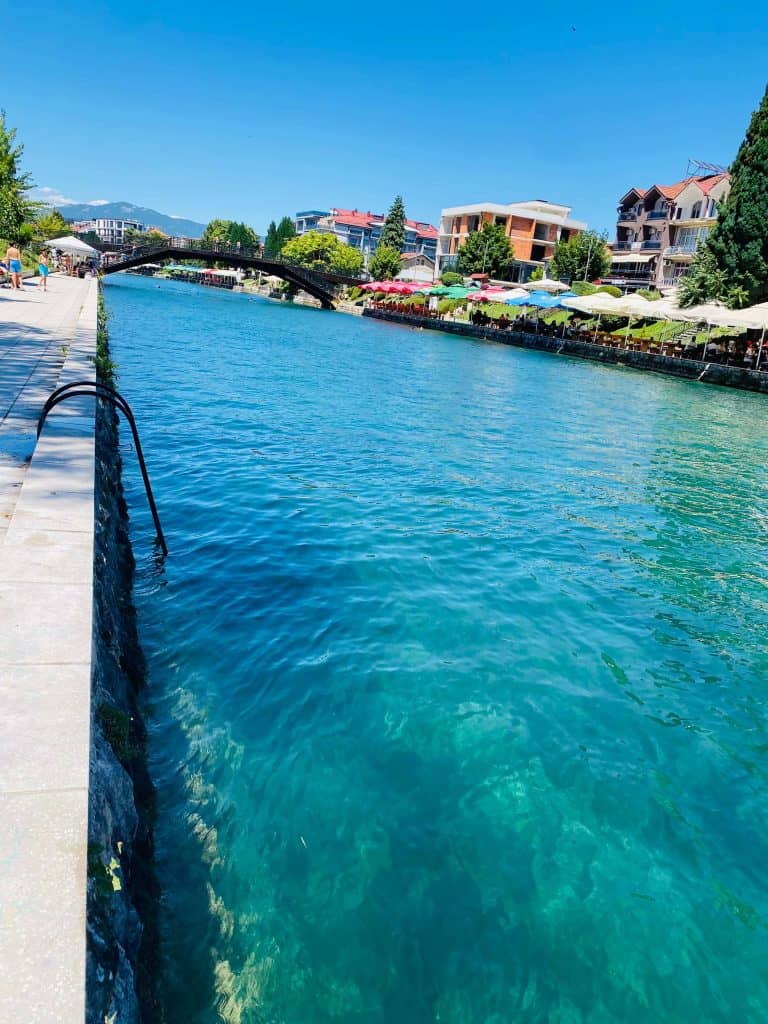
Struga sits on the edge of Lake Ohrid, in the southwest of North Macedonia, right where the Black Drin River begins its journey from the lake.
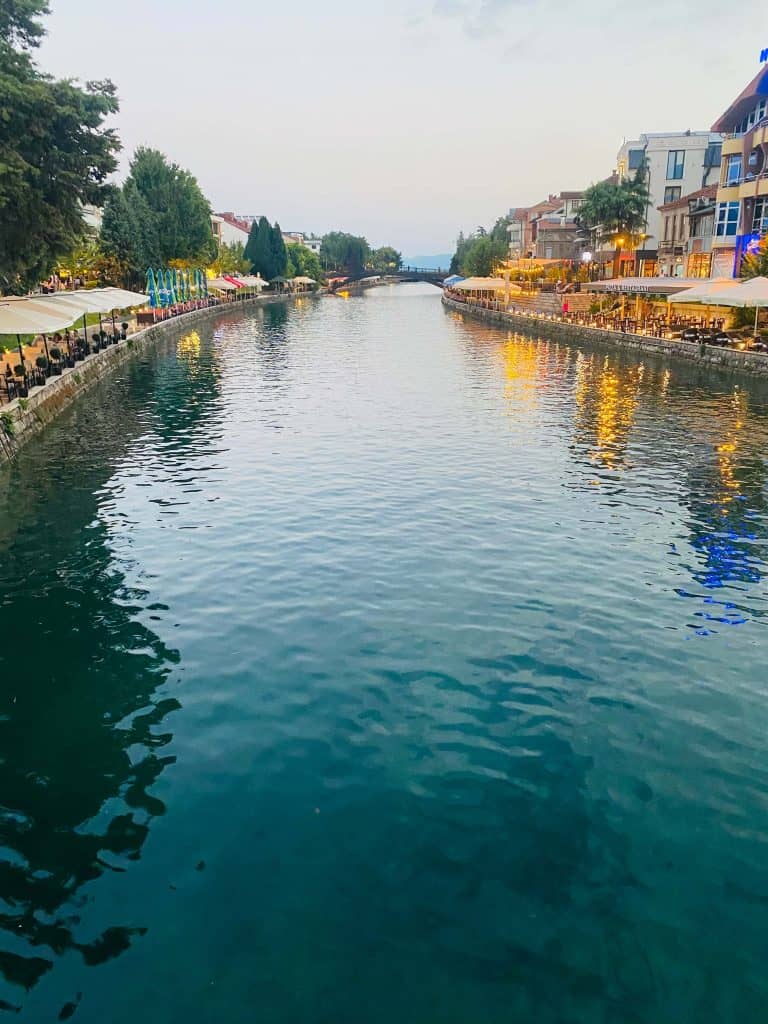
The town has a really unique setting. You can walk along the lake, find quieter beaches in one direction, head towards the center for more beaches, bars and restaurants, and eventually reach the river where the clear water rushes out from Lake Ohrid.
One of my favourite things to do in Struga was simply standing where the lake meets the river.
I would often find myself there just watching how clear the water was and listening to the river rushing away from the lake. It became one of those little daily moments that I never got bored of.
Getting to Struga
We arrived in Struga from Pogradec, Albania (link to our Pogradec blog here).
The journey was incredibly easy. We took a taxi, which took around 50 minutes and cost €50.
As a family of five traveling full-time, we do have to do things slightly differently from most travelers. We need a bigger vehicle and extra space for luggage, so smaller groups should expect to pay less.
The border crossing beside Lake Ohrid took less than 10 minutes, even at the end of July.
The journey itself was beautiful. Leaving Pogradec, we travelled through the mountains and the views were stunning. The roads climbed higher before opening up to views across Debar Lake, and then we crossed into North Macedonia.
If you’re flying, Ohrid Airport is very close to Struga, making it a really convenient option, although there are fewer flights compared to larger airports.
When we left, we travelled to Tirana Airport. The journey took around three hours and cost €140 for a larger taxi. A smaller vehicle would have been cheaper, but with our luggage and needing an extra seat, this worked best for us.
Why We Fell in Love with Struga
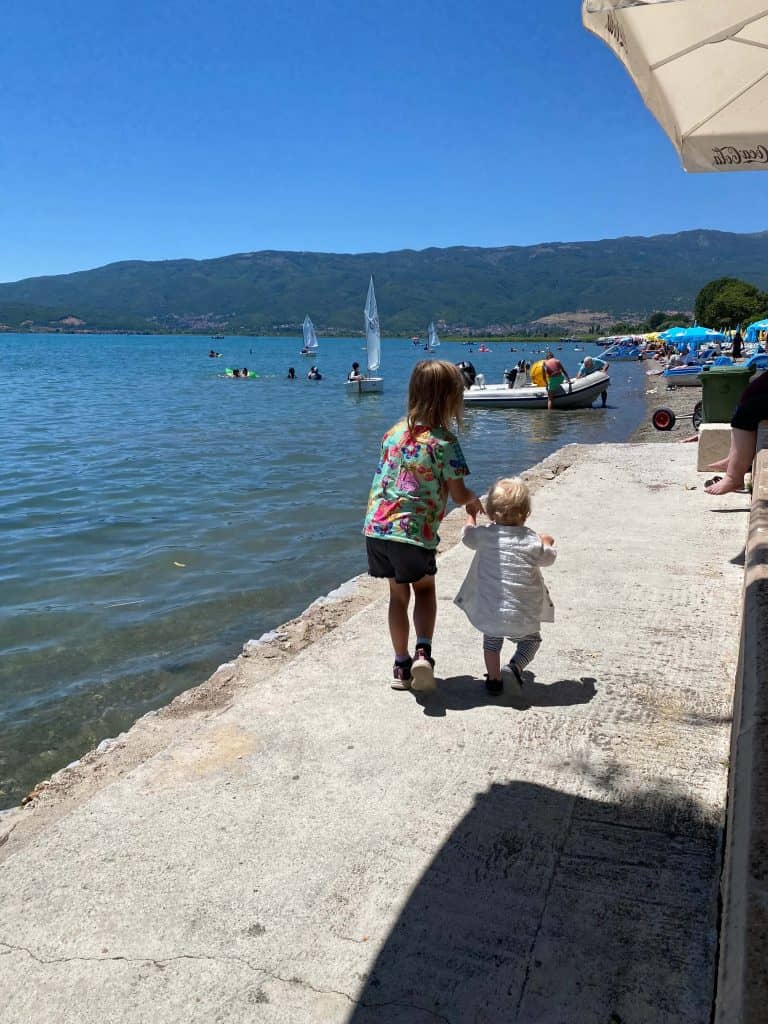
When we arrived in Struga, we weren’t expecting it to become our favourite place, but after a few days, we started to settle into the rhythm of the town.
Our days became centered around the water. We would swim, explore, find somewhere new to eat, wander through the streets and somehow always end up back at the lake.
One of the things that surprised us most was how clean and well looked after Struga felt.
I wasn’t sure what to expect before arriving, but we were genuinely impressed by how beautiful the lake was, how modern parts of the town felt, and how much care seemed to go into the streets and waterfront.
Even though we visited during peak season in July, it never felt overwhelmingly busy. There was enough atmosphere to make the town feel alive, but there was still space to relax.
For our family, that balance was perfect.
There was plenty to do, but we never felt like we were rushing from one activity to another.
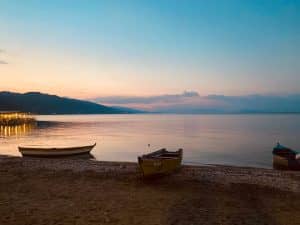
The mountains surrounding Lake Ohrid make the views incredible, especially at sunset. Watching the sun go down behind the mountains became one of our favourite parts of being in Struga.
The Bridge Jumps We Will Never Forget
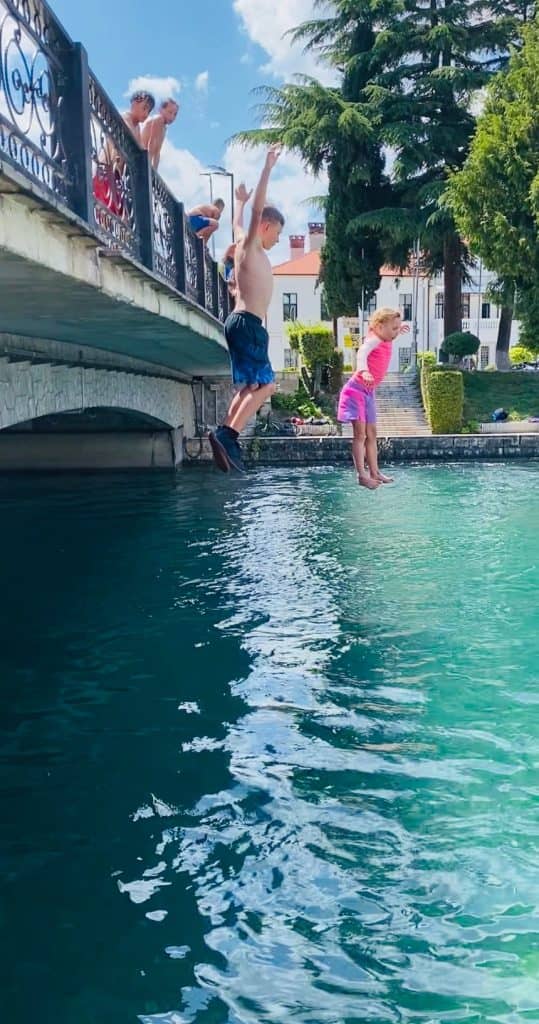
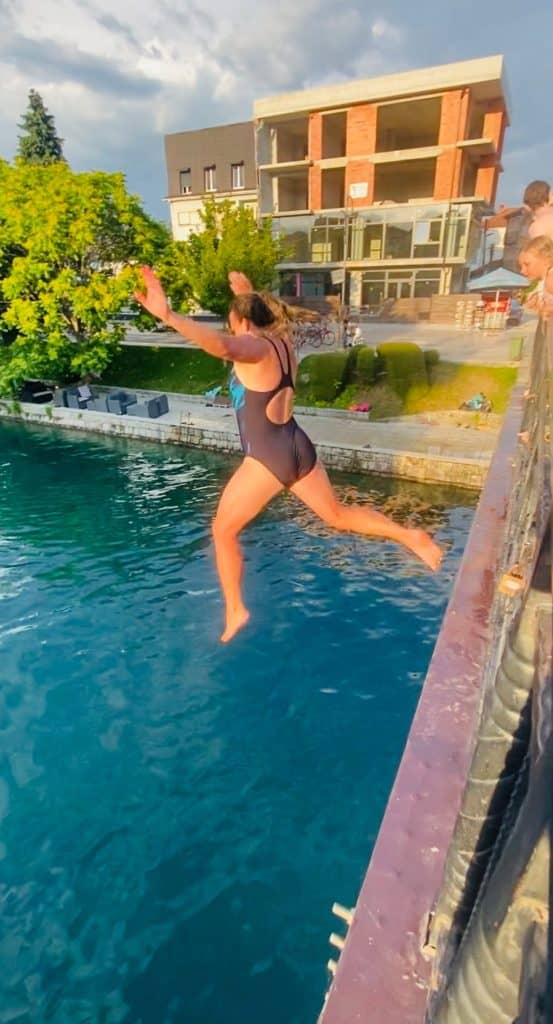
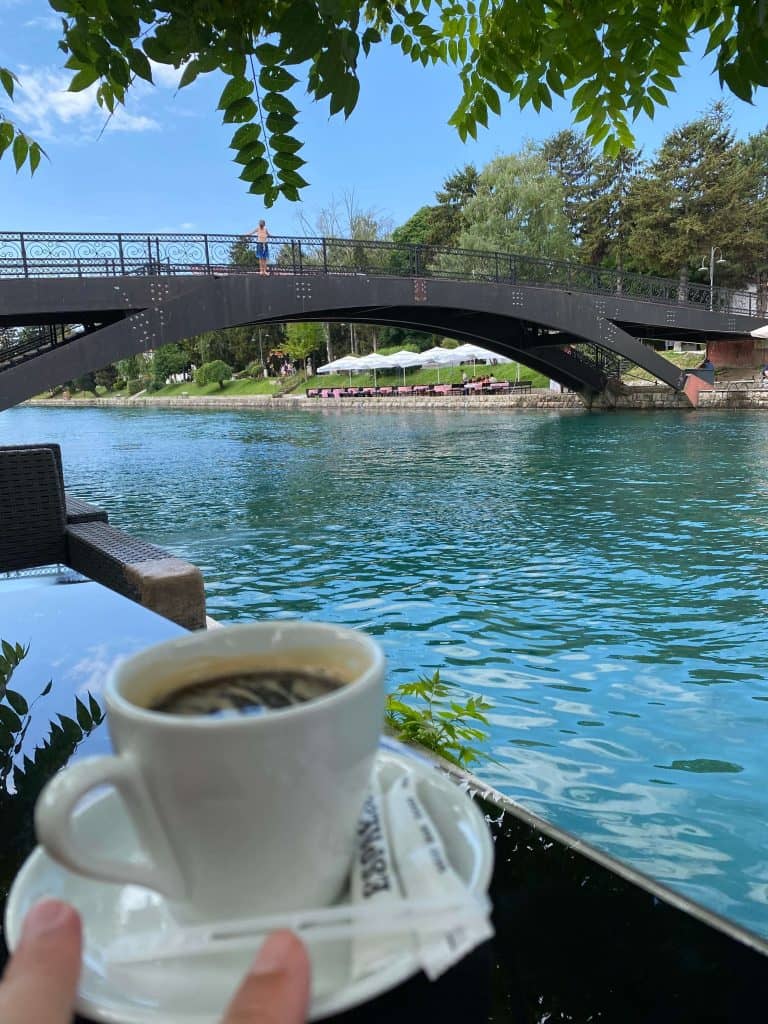
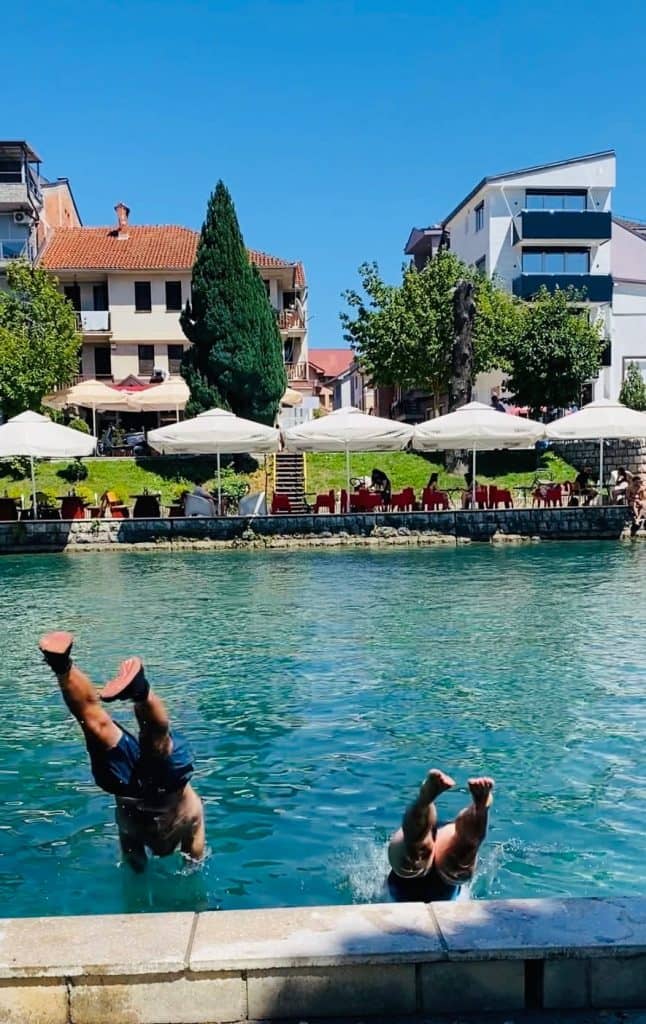
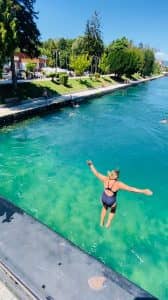
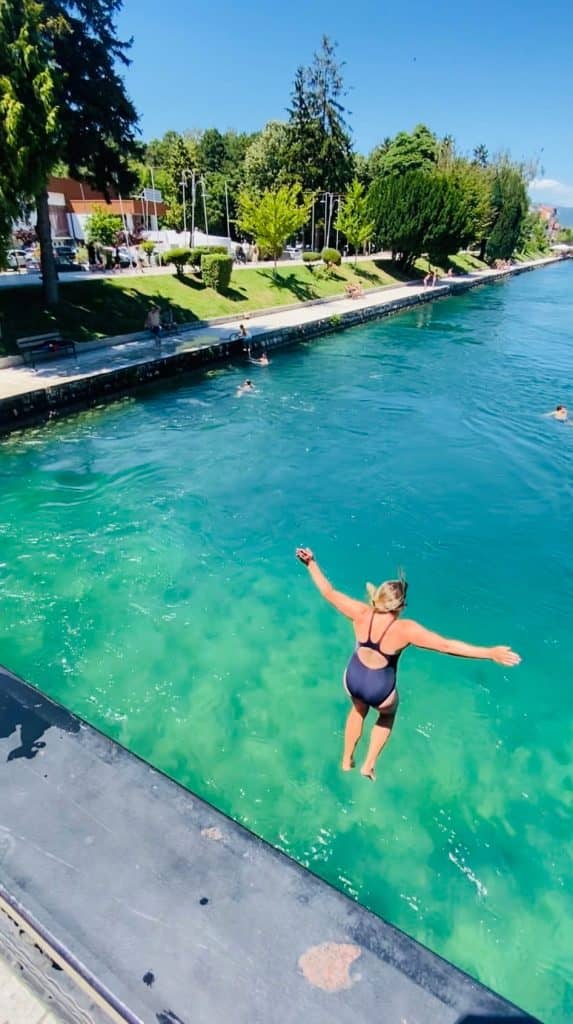
One of our biggest memories from Struga was the bridge jumping. We were walking along the river and noticed people jumping into the water. I looked over and immediately felt that little panic inside.
I quietly whispered to my husband:
“Should we?”
Before the kids had even noticed what was happening, because they were too busy watching everyone else jump, their dad was already on the other side of the barrier preparing to go in. They were so proud of him and cheering him on.
At that point, I couldn’t really stay behind, so I decided I needed to go too.
Our nine-year-old was absolutely delighted when we said he could join us. Our seven-year-old wasn’t quite ready that day, so instead she chose to jump in from the side of the river.
There are lots of places to climb out, but you do need to be careful because the river is moving quickly. You need to be a confident swimmer and make sure you can safely get out before jumping. Also, some days the river isn’t high enough to jump, which could lead to a serious injury. Over the next few days, our daughter built up the courage.
There were lots of:
“3… 2… 1…” followed by stepping back. Eventually she did it. She was shaking so much afterwards, but she was also incredibly proud. And then she went again. And again.
A few days later our son started asking about the highest wooden bridge. My first reaction was hesitation. Then I realised something. He wasn’t necessarily the one who was scared. I was. I had to check in with myself and realise I didn’t want him to miss out because of my fear. So I decided I would go first.
I climbed up, jumped in, and then he followed. We spent the rest of the evening climbing back up, jumping in and swimming until the sun started setting and we decided we should probably head home.
Looking back, it wasn’t really about jumping off bridges. It was about learning not to let our fears become our children’s limits.
Swimming, Snorkelling and Sailing on Lake Ohrid
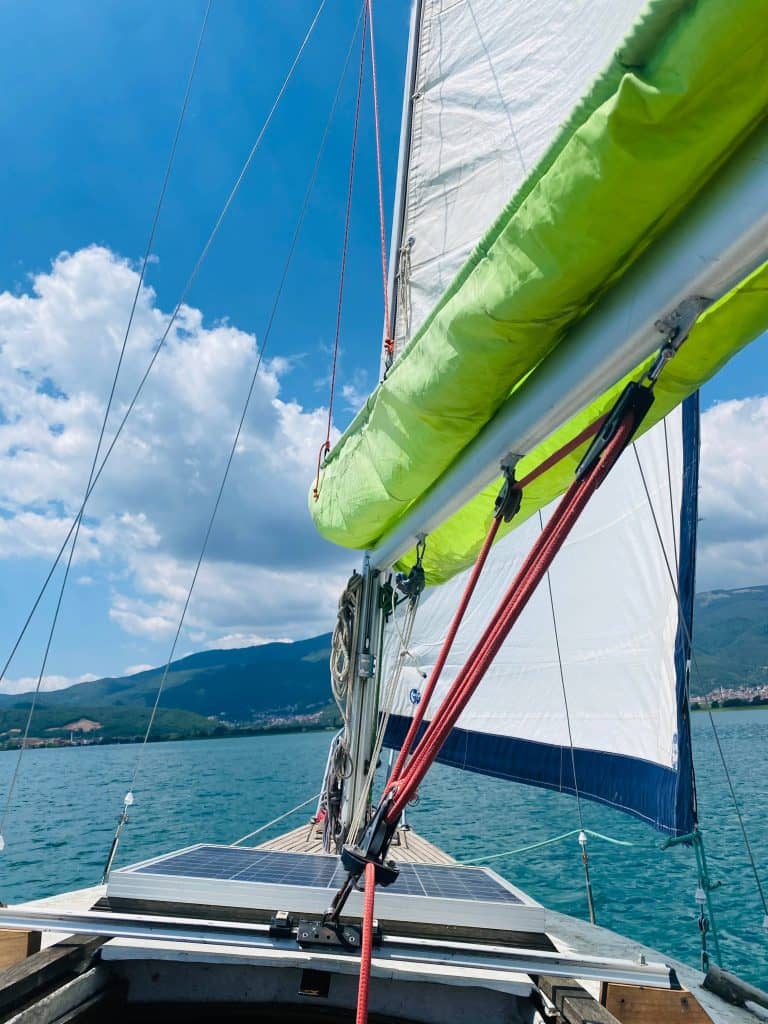
The water around Struga is incredible. Lake Ohrid is famous for how clear it is, and it really is something special to swim in. We spent so many days snorkelling, jumping from piers and swimming for what felt like hours. Some days one of us would swim while the others raced along the shore.
One of the highlights was sailing together as a family.
Before having children, we had sailed many times, but we had never shared that experience with them. Taking them out onto the lake, letting them jump from the boat and snorkel in the water was such a special memory.
Boat trips and sailing are available locally, and we paid around €40 for an hour.
If you prefer relaxing on the beach, sunbeds are available on many beaches for around €7 for two beds, depending on where you go.
One of my favourite simple memories was a man arriving on the beach selling corn on the cob. It sounds small, but sitting by Lake Ohrid eating fresh corn was exactly the type of moment we love about traveling.
Things To Do in Struga
Some of our favourite things to do in Struga were:
- Swimming in Lake Ohrid
- Snorkelling in the clear water
- Jumping from the bridges (with care and only when conditions are safe)
- Walking along the Black Drin River
- Sailing on Lake Ohrid
- Exploring the beaches
- Watching sunset over the mountains
- Shopping in the town
- Taking a day trip to Ohrid
A taxi from Struga to Ohrid costs around €7 each way, making it a very affordable day trip.
Shopping in Struga
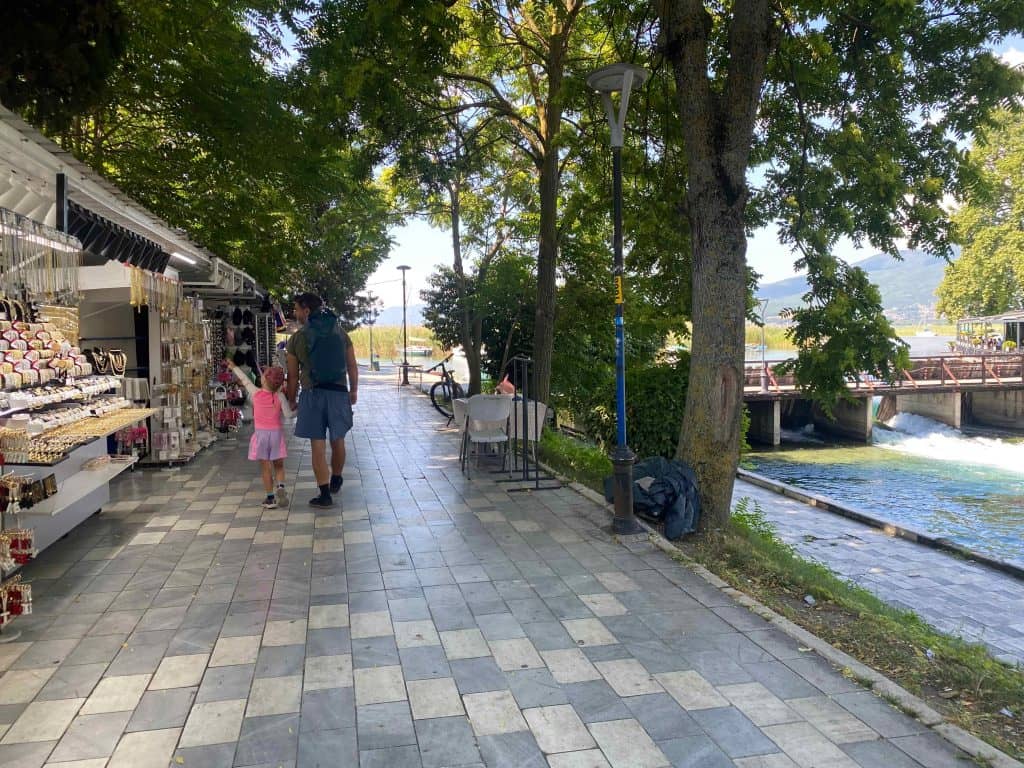
We were pleasantly surprised by the shopping in Struga. The streets were clean and enjoyable to walk around, with lots of different shops.
We found:
- Ohrid pearl jewellery
- Children’s shops with quality toys
- Sports shops
- Designer shops
- Affordable summer clothing
The children loved exploring the toy shops, and it was nice to find practical things as well as souvenirs.
Eating in Struga
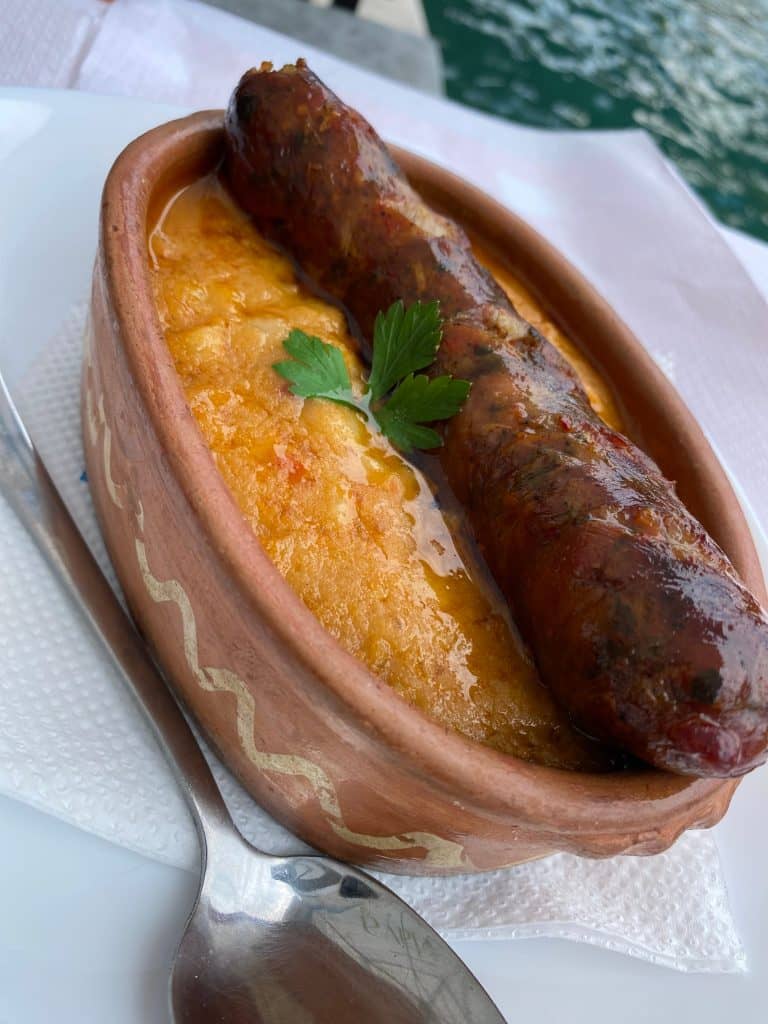
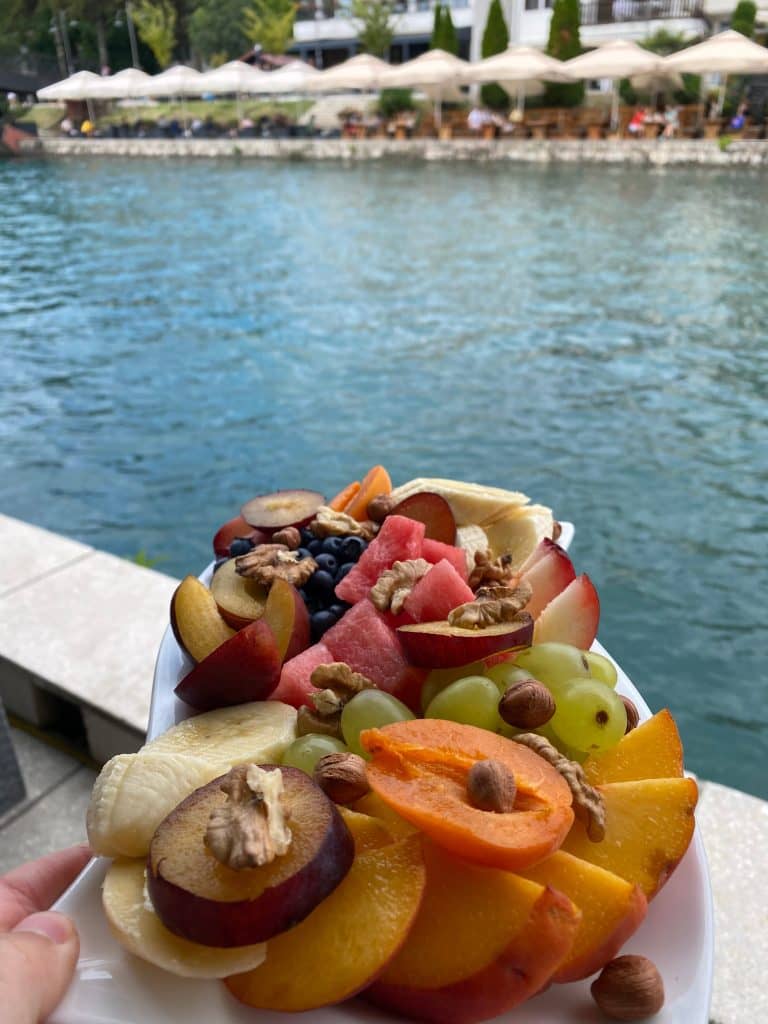
The food was another highlight.
There are so many great places to eat, from traditional Macedonian dishes served in clay pots, to meat platters, fresh fish, pizza and salads.
As a family of five, we could comfortably eat out for around €30, although you can spend more if you choose higher-end fish or meat dishes.
Our favourite restaurants:
- Antika Restaurant – Always very busy compared to other restaurants, but you can see why with a great selection of different dishes; everything we ordered was perfect (3 x different salads, vegetarian plate, pork stew, side potatoes).
- Escobar Struga – Where we had the best meat platter in all of Struga.
- Pizza Angela – For the best pizza, they are massive, and you can even order dairy-free (they called it plastic cheese, but we knew what they meant).
- Etno Restaurant – For a quieter dining experience with great views.
- Castello – For the friendliest staff and river views.
I could name so many different restaurants, but these were our family favourites. We were able to see most menus in English, but also love figuring it out for ourselves. I am gluten-free and didn’t find one menu that specified gluten-free food. However, I was able to eat in every restaurant we went to and didn’t get ill once. Generally, all meat, fish, cheese and salad dishes were fine. My son is dairy-free, and again, whilst no menu specifies, you can ask for no cheese, butter to be added to meals and if in doubt, Pizza Angela was a great choice.
Where To Stay in Struga
If you’re planning a trip to Struga, these are some accommodation options we’d recommend:
- Dishli Hotel & Spa – For a beachfront stay, with breakfast included and all the extra facilities.
- Villa Desanka Apartments and Studios – Perfect for a family stay surrounded by a garden oasis and beachfront views.
- City center apartment’s Struga – convenient location and budget-friendly.
- Cottage Modrich – authentic traditional accommodation, family-friendly.
- Struga Riverview Hotel – Best for couples, views and location.
Before you book your accommodation…
If you choose to book through the links on this page, we may earn a small commission at no extra cost to you.
That commission helps our family continue traveling, worldschooling our children, and, most importantly, keeps us creating honest, first-hand travel guides based on places we’ve actually visited.
As AI fills more of the internet with generic travel content, we’re committed to sharing real experiences from real people. Every booking made through our links helps keep those genuine voices alive.
Thank you for supporting our family and this little corner of the internet. It genuinely means a lot.
Cost of Visiting Struga
We found Struga very affordable compared to many European destinations.
Approximate prices:
- Coffee: around €1
- Ice cream: around €0.80
- Sailing: around €40 per hour
- Taxi to Ohrid: around €7 each way
- Family meal: around €30
As a family of five, we spent around €35 a day on food shopping, including breakfast items, lunches, snacks, toiletries and other essentials, while usually eating one meal out each day.
Things To Know Before Visiting Struga
A few things we noticed during our month here:
- Cards are widely accepted, but carrying Macedonian denar is useful. Paying in denar usually works out cheaper than paying in euros.
- You will need cash for some smaller cafes, markets, street stalls and beach sellers.
- Smoking is common in North Macedonia. We sometimes chose quieter restaurants and occasionally moved on the beach when people smoked close to us.
- We did see snakes in the river and lake. They were non-venomous water snakes, including dice snakes, but if you aren’t a fan of snakes it’s worth knowing.
- The roads were good and we felt safe traveling around.
- The town is developing quickly. During our month there, we watched lots of road improvements and infrastructure work taking place.
Is Struga Worth Visiting?
For us, absolutely.
We have loved everywhere we have visited on this journey, but Struga has a special place in our memories. It gave us adventure, beautiful scenery, friendly people, great food and some of our favourite family moments so far. Sometimes the places you arrive at without huge expectations become the ones you remember the most.
For us, Struga was one of those places.
We are sharing our family’s full-time adventure as we travel, learn and explore together.
Follow along on Instagram: @alittlemoreoutdoor
Or visit our website for more family travel guides and stories from our journey.