
We spent 11 weeks travelling around Lake Ohrid, with seven weeks on the Albanian side using Pogradec as our base, followed by another four weeks on the North Macedonian side, based in Struga.
We weren’t expecting the two sides of the lake to feel so different.
Pogradec and Struga are only around a 50-minute drive apart, and both are lakeside towns with a strong tourist trade and people living there all year round. Yet crossing the border felt like arriving somewhere completely different. It wasn’t necessarily better or worse; the atmosphere, culture and experience were simply different.
The funny thing is that our family didn’t even agree on which side we preferred. My husband and I both preferred North Macedonia, while the children would choose Albania.
After spending so much time here, we got to experience far more than you could fit into a normal holiday. We found favourite swimming spots, walked through old towns, explored the mountains, ate our way around the local restaurants and watched our children become increasingly confident in the water.
So, if you’re looking for the best things to do around Lake Ohrid, this is our family guide based on actually living around the lake for 11 weeks.
Why We Loved Lake Ohrid
The biggest attraction is obviously the lake itself, but what we loved was how much variety there was around it.
There are public beaches, private beaches and commercial beaches, along with quiet swimming spots where you can simply put down a towel. You can walk beside the lake, hike into the mountains, take a boat trip, go paddleboarding, hire a pedalo or go sailing.
Away from the water, there are old towns, monasteries, markets, rivers, nature parks and plenty of history to discover.
The area also has a thriving year-round community, which was something we really enjoyed. We weren’t just surrounded by tourists, particularly during our time in Pogradec, and it was easy to settle into a slower daily routine.
The food was another highlight. Some places aren’t quite as cheap as you might expect, particularly in the busier summer months, but we found the overall value very good. There are also plenty of healthy options, which suited us as a family.
As someone who is coeliac, I was also pleasantly surprised by how many things I could eat. Gluten-free food isn’t always clearly advertised, but we found plenty of naturally gluten-free choices, including salads, risottos, meat platters, fish dishes and soups. Supermarkets also stocked some gluten-free products.
If you’re particularly interested in where to eat and where to stay, we’ve written separate guides to [Pogradec] and [Struga], which go into much more detail.
1. Visit Pogradec, Albania
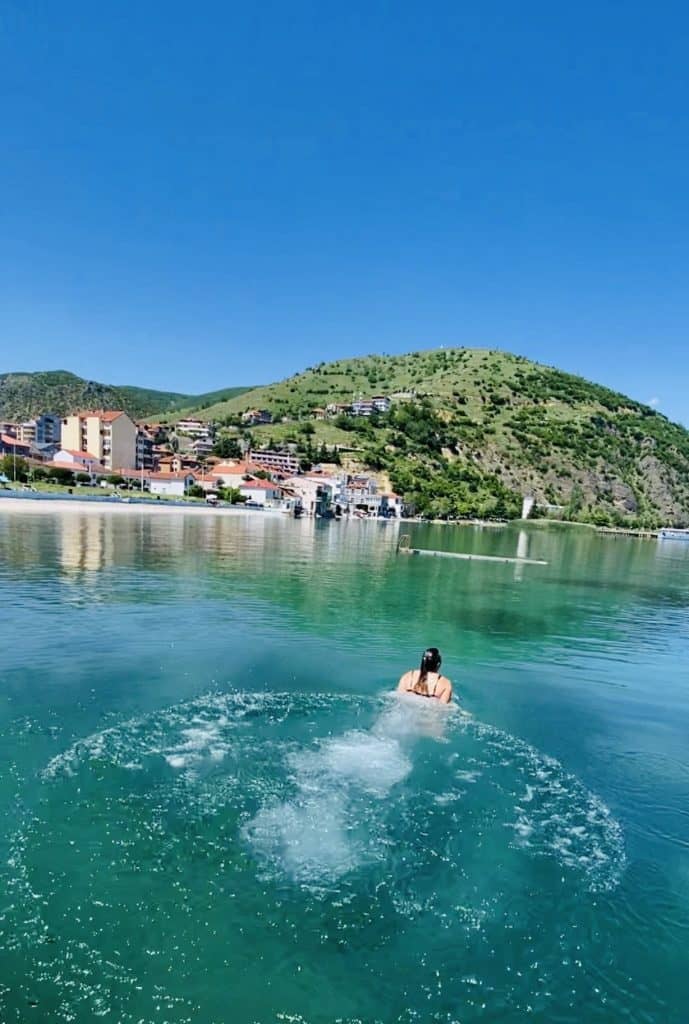
Even if you choose to stay on the North Macedonian side of Lake Ohrid, I’d recommend making time for Pogradec.
We spent seven weeks here, so we got to know it much better than somewhere we simply passed through for a day.
For us, Pogradec felt more homely. We got to know the people in the local shops, bought fruit from the fruit shop, picked up bread from the bakery and started returning to the same restaurants.
It was also more affordable, which meant we could eat out more regularly and experience more of everyday life.
Walk Along the Pogradec Promenade
The promenade is one of the easiest ways to get a feel for Pogradec.
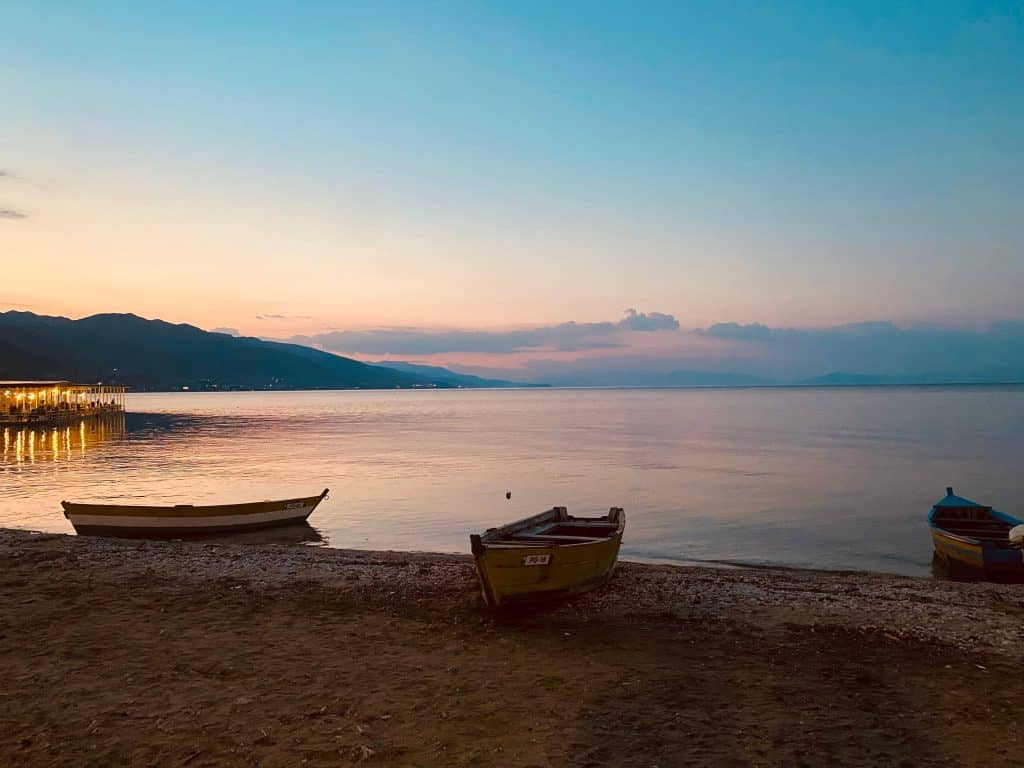
During the day, it’s a lovely place to walk beside the lake, but we particularly enjoyed it in the evening when the town comes alive.
There are restaurants, families out walking and plenty of people enjoying the cooler evening air. Our children quickly became comfortable walking around and saying hello to local people, which was one of the things they loved most about Albania.
Swim From the Old Beach and Pier
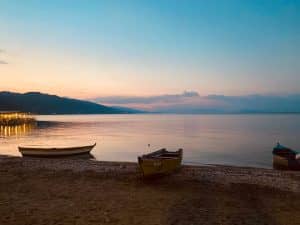
One of our favourite swimming spots in Pogradec was the old swimming beach, particularly around the pier.
The lake is the centre of life here, and there is something lovely about being able to spend an afternoon simply swimming and watching what is happening around you.
The water did seem slightly murkier on the Albanian side compared with some of the places we visited in North Macedonia, but we still found plenty of great places to swim.
Walk Through the Rose Gardens
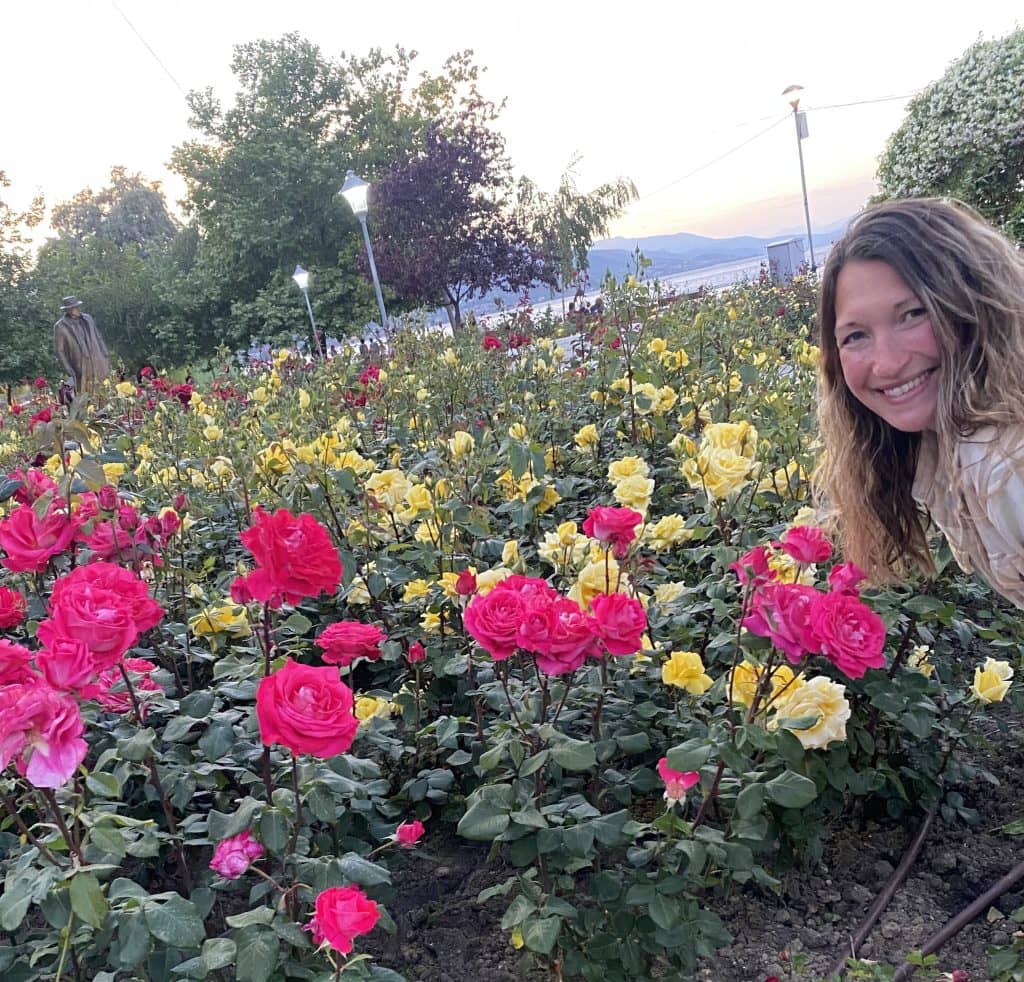
The rose gardens make a nice addition to a walk around Pogradec, particularly if you’re already exploring the promenade and town centre.
It’s another example of how easy it is to combine a few small attractions without needing to plan an entire day around them.
Go Fishing From the Pier
The pier is also a good place to stop and watch local people fishing.
It isn’t necessarily a major tourist attraction, but we enjoyed these simple moments because they gave us a better feel for everyday life around the lake.
Watch the Fountains
The fountains are another easy stop when exploring Pogradec with children, especially when you’re already walking around the centre.
Hike to Pogradec Castle
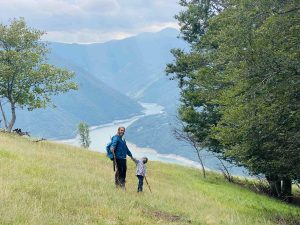
If you have more time, head into the hills above Pogradec and walk up to Pogradec Castle.
We did this walk with our children and it took around two hours, including time to explore along the way. The route is well marked and there are some steep sections, but they don’t last for long and our children managed it without too much difficulty.
The views from the top make the effort worthwhile.
Try the Chestnut Trail
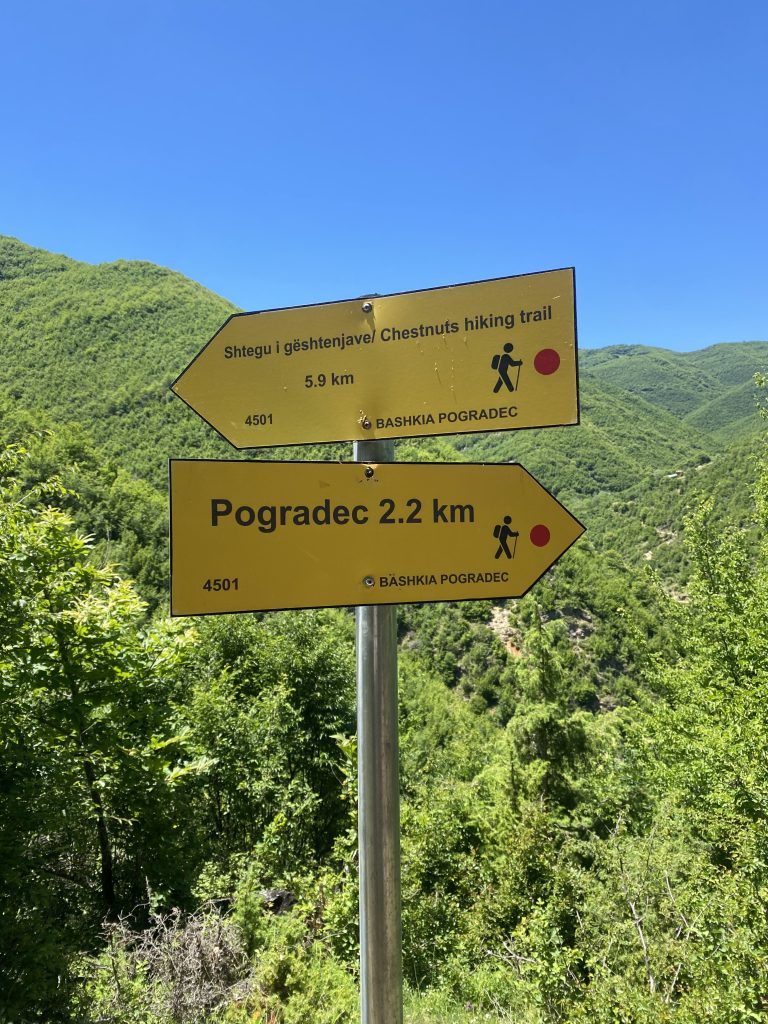
For more experienced hikers, the Chestnut Trail offers a much bigger challenge.
We did this with our 9- and 7-year-olds, while carrying our 1-year-old in a sling. By the end of the day, the children were completely exhausted.
There are some steep sections, slippery areas and a small landslide that we had to navigate, so good footwear is important. The route is well marked, but this isn’t a casual family stroll.
For us, that was part of the fun. Reaching the top, seeing the stones and working together to navigate the more difficult sections turned it into one of those family adventures that we’ll remember for a long time.
Take a packed lunch, though, because there aren’t stops along the route.
2. Explore Tushemisht
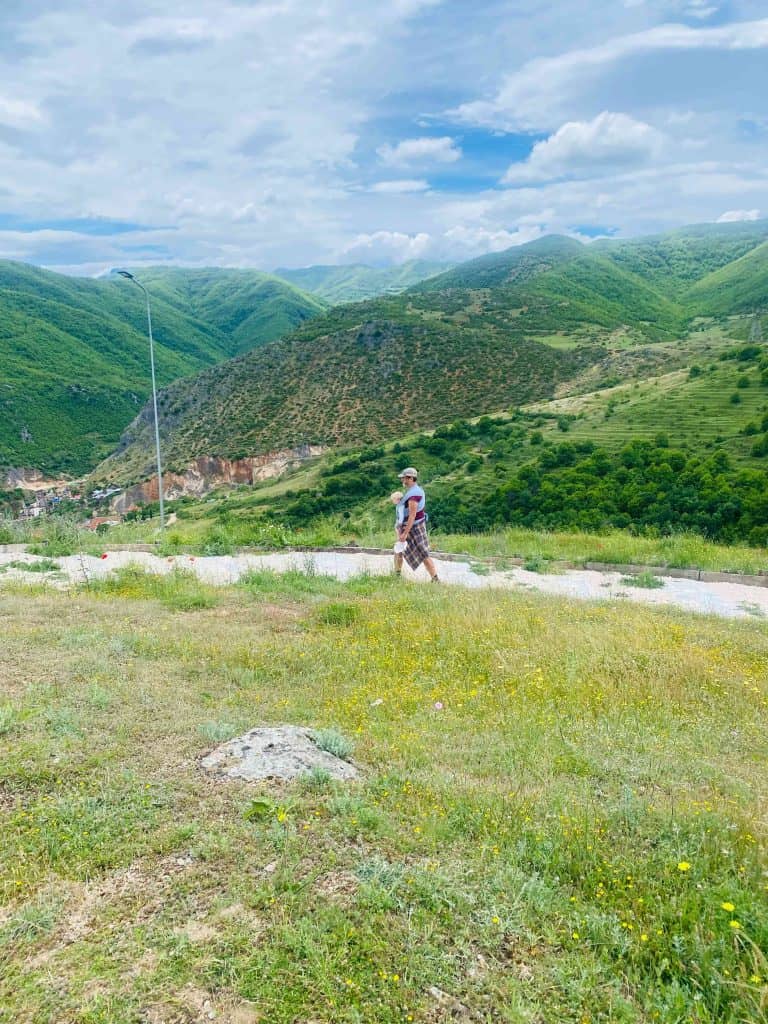
Just outside Pogradec is the small village of Tushemisht, which is well worth a visit.
We probably wouldn’t choose it as our base because it is quite small, but it makes a lovely day out.
You can wander through the old cobbled streets, eat beside the stream, walk along the boardwalk and explore the peaceful nature park. There are also street stalls to browse and you can walk towards the border with North Macedonia.
It feels very different from the larger tourist towns around Lake Ohrid and was one of our favourite places to slow down for a few hours.
3. Explore Struga, North Macedonia
After seven weeks in Albania, arriving in Struga was one of the biggest surprises of our time around Lake Ohrid.
The drive between Pogradec and Struga isn’t long, but the change in atmosphere was noticeable as soon as we arrived.
We loved how clean Struga felt, and I particularly loved the river running through the town. My husband enjoyed the culture, people and prices, while the children loved how welcoming everyone was and the extra activities they could do around the water.
Walk Where the River Meets the Lake
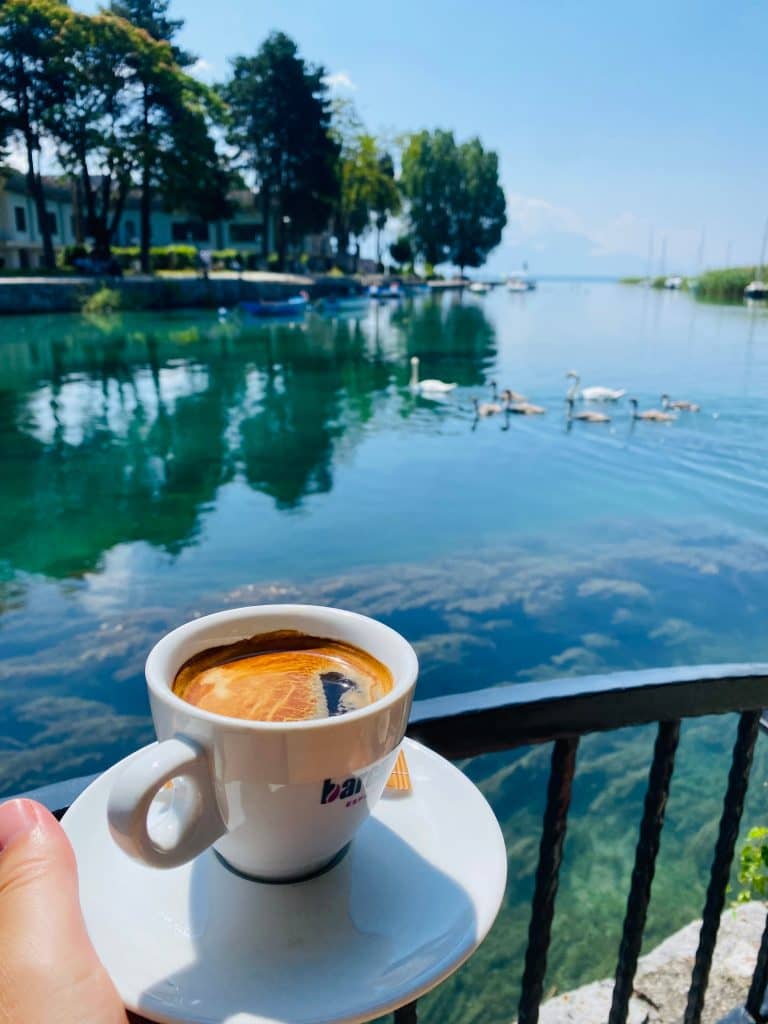
One of my favourite things to do in Struga was simply walk along the river and around the point where it meets Lake Ohrid.
There are places to sit with a coffee, watch the boats and enjoy the water, while the walks along the lake give you plenty of opportunities to escape the busier streets.
When the weather warmed up, the river became particularly appealing. With outside temperatures around 30°C, the river water felt incredibly refreshing.
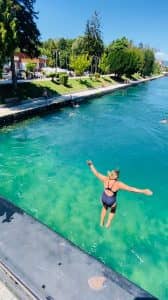
Jump From the Bridges
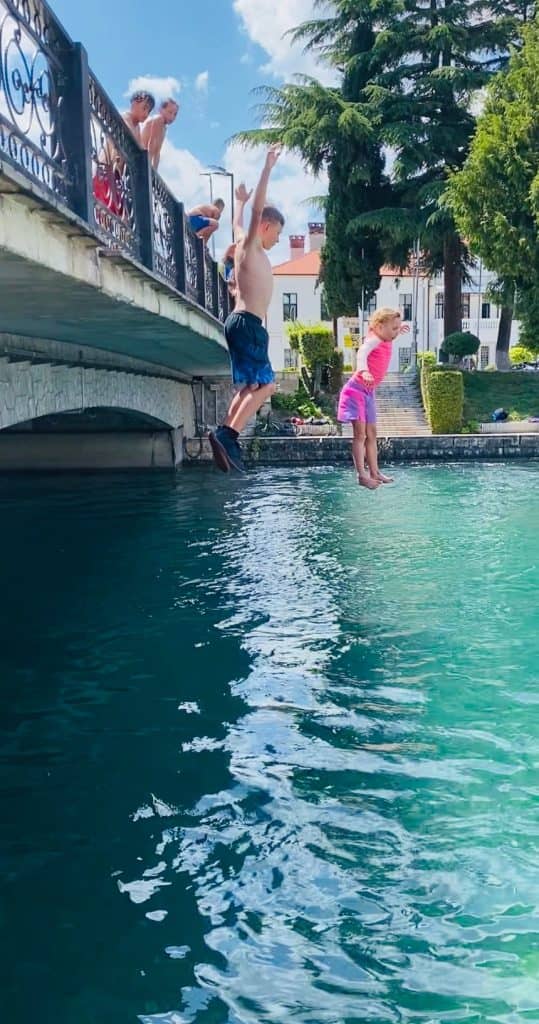
This became a real highlight for our children.
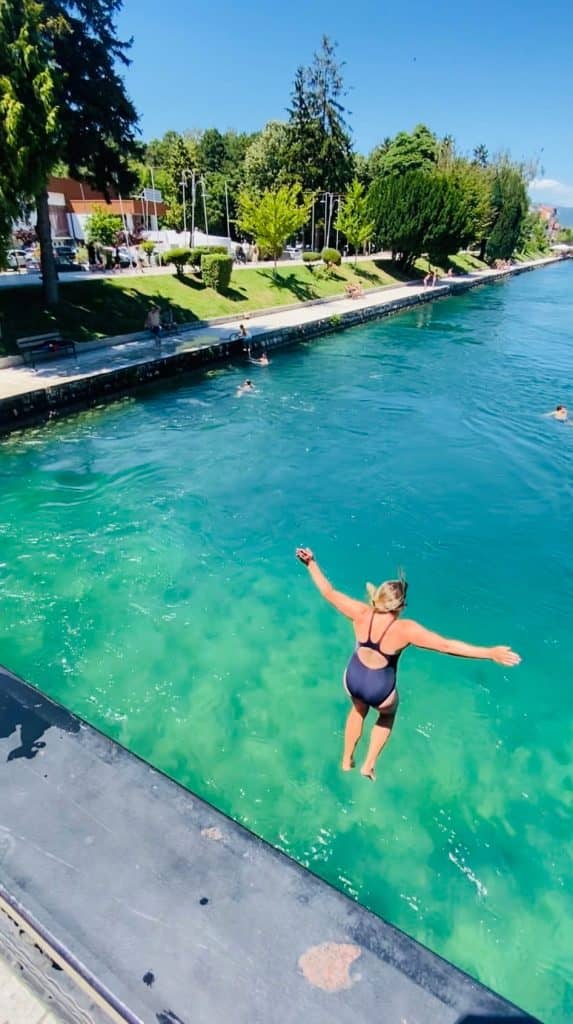
There are several bridges around Struga where people jump into the river, including the main town bridges and the old bridge.
Our 9-year-old absolutely loved it and kept going back for more. Our 7-year-old tried it several times but preferred jumping from the side into the river and using the steps around the bridge.
Watching the children become more confident in the water was probably one of my favourite parts of the entire 11 weeks.
Swim in the River
You don’t always need to find a beach to enjoy the water around Lake Ohrid.
The river running through Struga provides another way to cool down, and when temperatures reached around 30°C, the cold water was incredibly refreshing.
The lake itself was around 24°C when we visited in July, which made swimming very enjoyable.
Visit the Struga Museum
The museum in Struga was a slightly random find for us, but the children absolutely loved it.
It contains a collection of local and European stuffed animals, which wasn’t quite what we were expecting when we walked in.
For the children, though, it was fascinating, and sometimes those unexpected attractions end up being the ones they remember most.
Explore the Shops
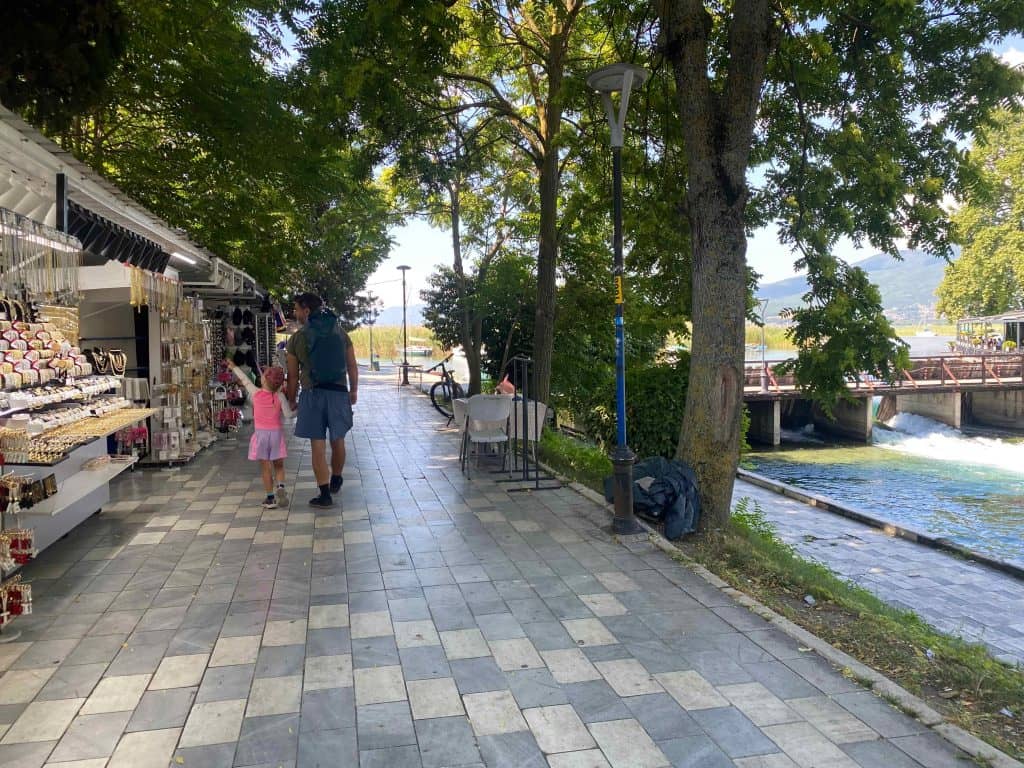
Struga has a good selection of shops, including a street with lots of clothes shops.
You’ll also find plenty of places selling silver and the famous Ohrid pearls, so it’s a good place to browse if you want something different from the usual tourist souvenirs.
Get Out on the Water
There are plenty of ways to enjoy Lake Ohrid from Struga.
You can hire a pedalo, try paddleboarding, take a small boat trip or go sailing.
We chose to go sailing as a family, which was particularly special for us because sailing was something my husband and I used to do together before we had children.
Being able to introduce the children to something that had been part of our lives before them made it a really memorable family experience.
4. Spend a Day in Ohrid
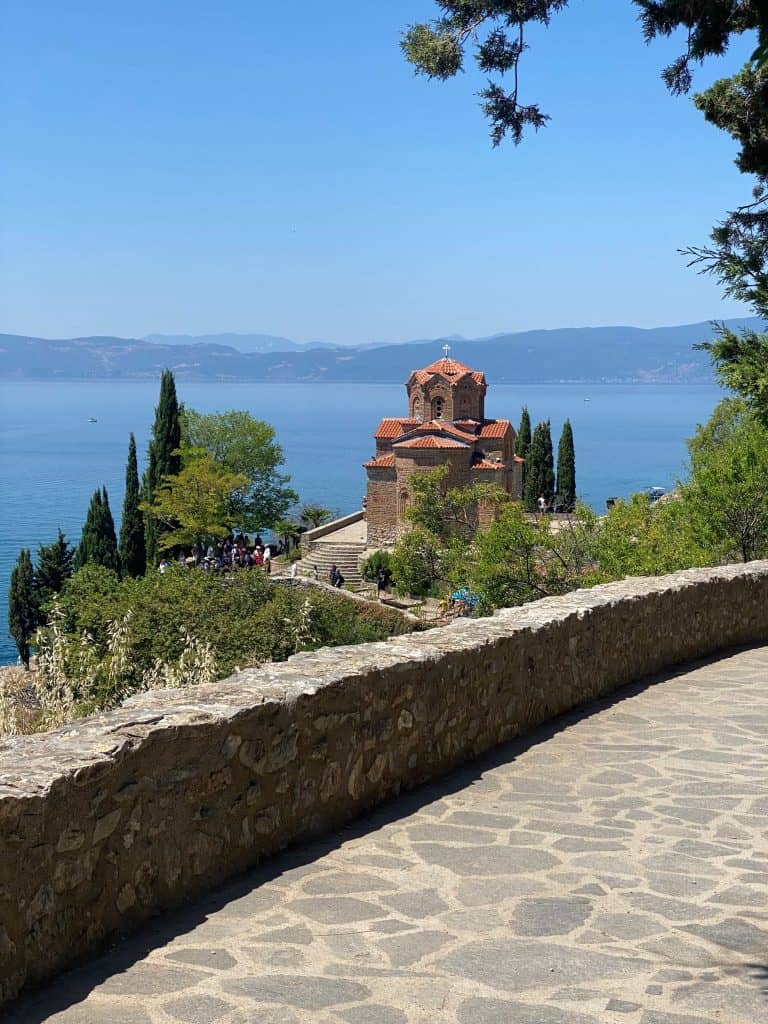
Ohrid is probably the most commercial and touristy destination around the lake, but that doesn’t mean it isn’t worth visiting.
We really enjoyed spending a couple of days there.
There are more shops, more restaurants, more boat trips and more things happening, along with a larger market and plenty of historical sites.
For us, though, it would have been too busy and expensive to use Ohrid as our base for several weeks.
If you’re walking around the port, expect to be approached by different boat operators offering tours. There are plenty of options, but it can feel quite different from the quieter atmosphere we experienced in Struga and Pogradec.
For a couple of days, however, we thought Ohrid was great.
Explore the Old Town and Hills
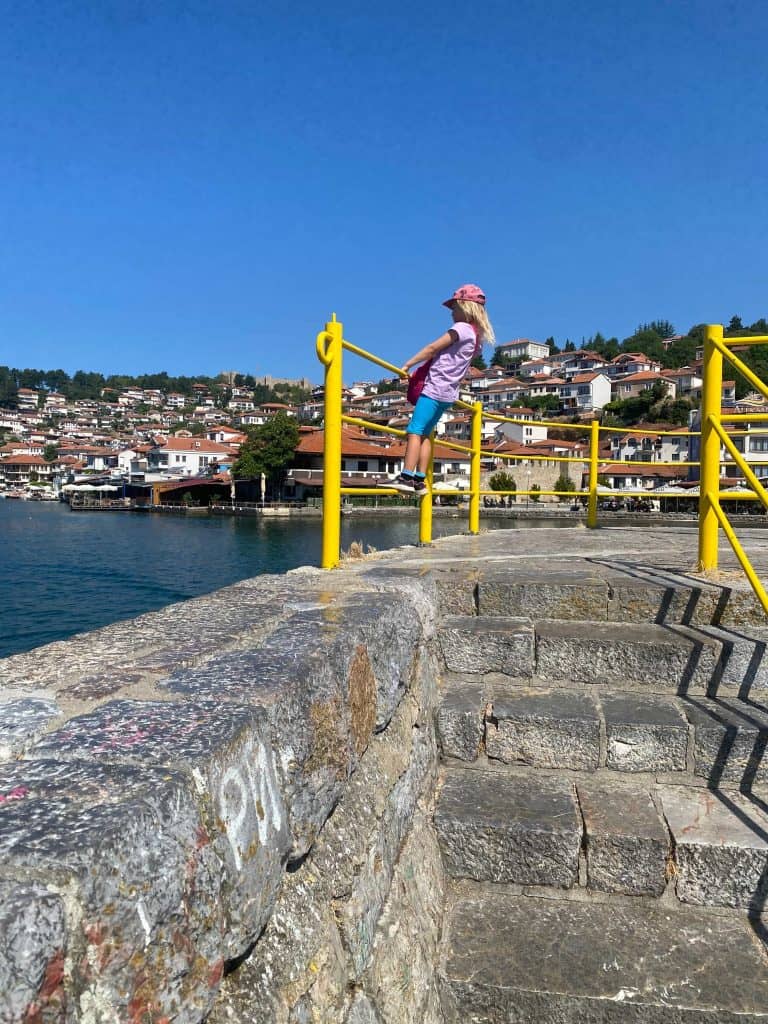
There are some lovely walks around Ohrid, particularly if you head away from the busiest parts of the town and into the trees.
Along the way you’ll find smaller natural beaches and quieter places to stop beside the lake.
It’s a good way to combine the history and atmosphere of Ohrid with some time in nature.
5. Visit St Naum Monastery
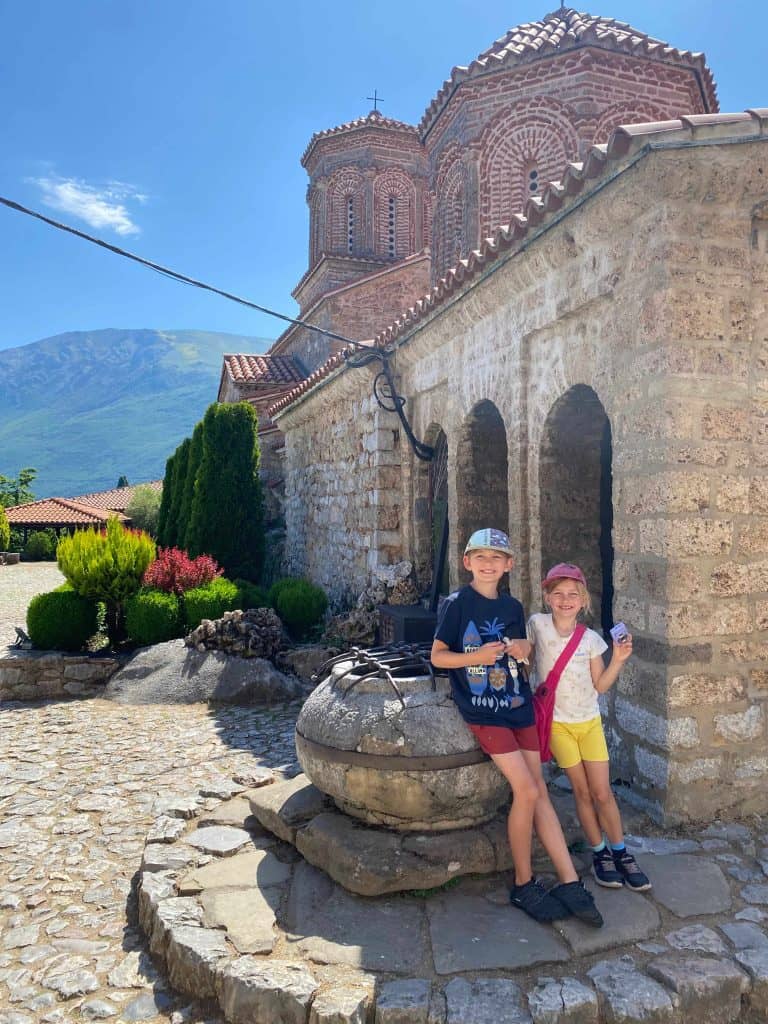
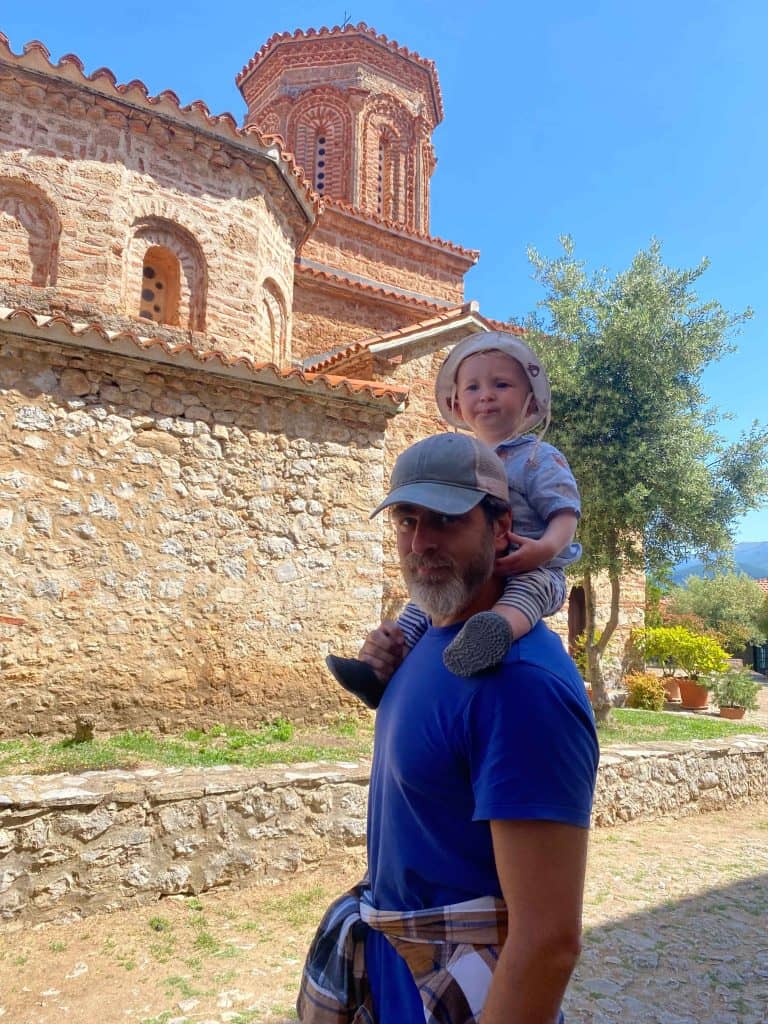
St Naum was one of our favourite days out around Lake Ohrid.
The monastery itself is beautiful, but there is plenty more to see and do around the area.
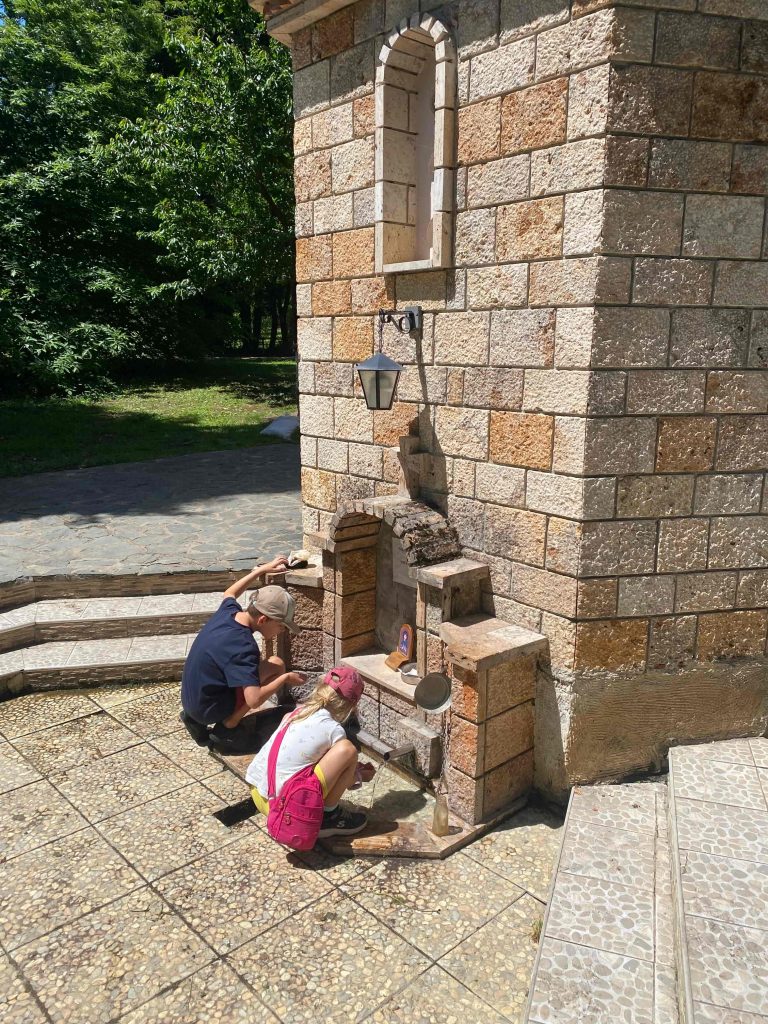
We climbed up the hill, explored the surroundings and drank from the natural springs. The children loved watching the small boats leave for short trips through the streams.
We even saw snakes swimming in the port.
There are also some incredibly clear swimming spots around St Naum, making it easy to combine sightseeing with a swim.
The children particularly enjoyed snorkelling, and they found the underwater world fascinating.
It was one of those days where we kept finding another little thing to explore, rather than simply arriving, taking a photo and leaving.
6. Explore the Bay of Bones
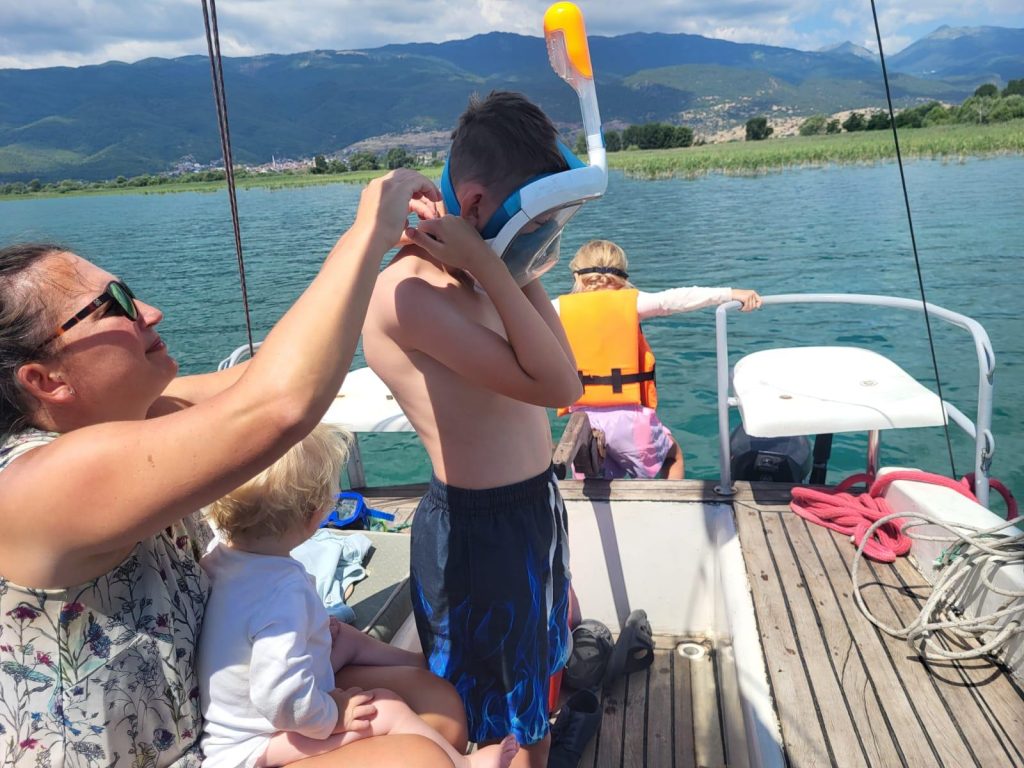
The Bay of Bones is a fascinating place to visit if you’re interested in the history of Lake Ohrid.
The reconstructed settlement gives you an idea of how people lived on and around the lake thousands of years ago.
For us, the most memorable part was actually getting into the water.
We went snorkelling and could see some of the old wooden structures beneath the surface.
The children found it fascinating, and seeing traces of the old settlement underneath the water gave us a completely different appreciation of the history of the lake.
7. Find Your Favourite Lake Ohrid Beach
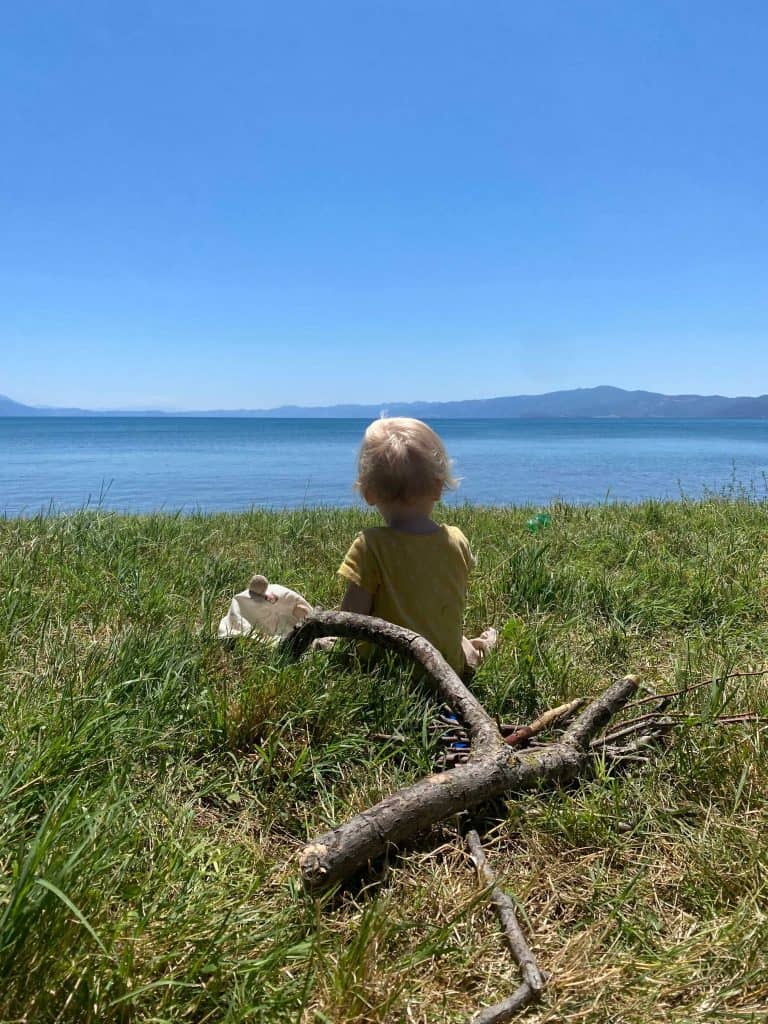
One of the things we loved about Lake Ohrid was the sheer variety of places to swim.
There are public beaches, private beaches, commercial beaches and quieter spots where you can simply put down your towel and get in the water.
In Pogradec, we particularly enjoyed the old swimming beach and pier.
Around Ohrid, we found a lovely private beach down near the monastery.
Struga also has plenty of options, depending on whether you want facilities and sunbeds or somewhere quieter.
Lake Ohrid Beaches in High Season
This is one area where our experience probably wasn’t completely equal because we experienced the two sides of the lake during different parts of the season.
We were in Pogradec from April into June, while we experienced Struga during the busier summer period.
By July, some beaches had become much more commercial, with sunbeds and facilities taking up more space.
That isn’t necessarily a problem if you enjoy that type of beach, but it wasn’t really our preference.
The good thing is that you can still find public areas where you can use an umbrella without paying to access a private beach.
We did also come across some glass on the beaches, so we’d recommend wearing water shoes, particularly with children.
Smoking is also quite common, including in outdoor restaurant areas. As non-smokers, we’d often choose to eat inside rather than sit next to people smoking.
Lake Ohrid With Kids
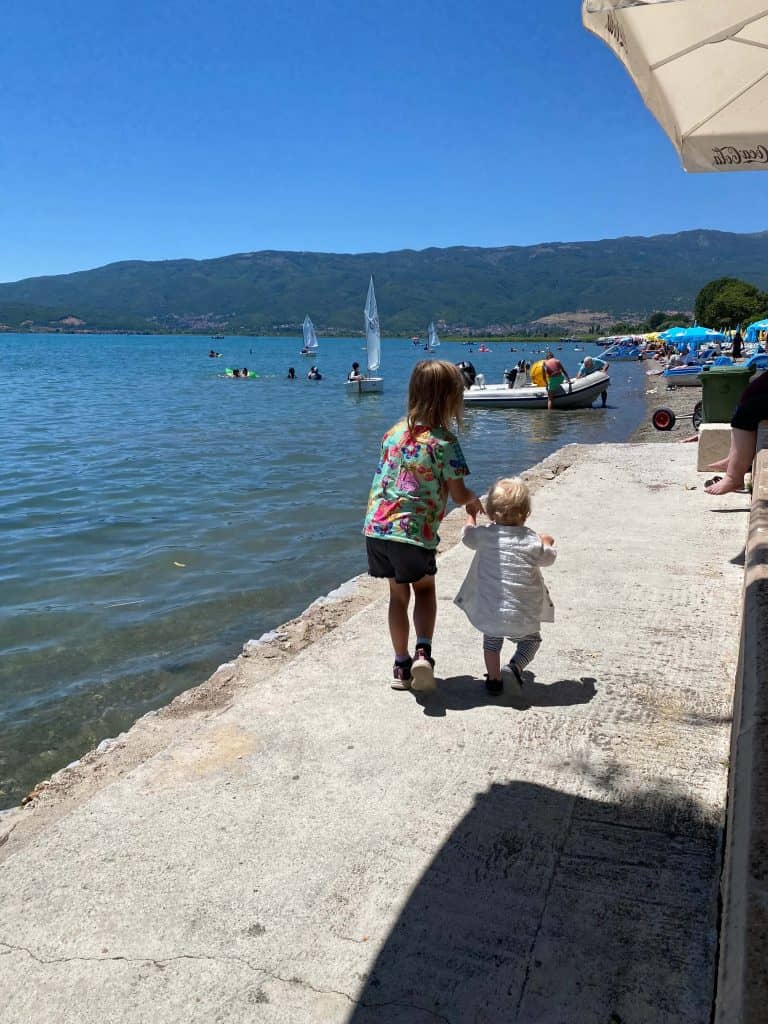
We travelled around Lake Ohrid with our three children, aged 9, 7 and 1.
Overall, we found the area very family friendly.
People on both sides of the lake were incredibly welcoming towards the children, and our older two had plenty of opportunities to explore, swim and get involved in activities.
The main challenges were more practical.
Restaurants aren’t always set up with young children in mind, and we didn’t find highchairs or baby-changing facilities particularly common. With our youngest, we therefore used the pram a lot.
The towns themselves are relatively easy to explore on foot, though, and we did a huge amount of walking.
There isn’t a huge amount of public transport around Pogradec, so we used affordable taxis when needed. We also used taxis in North Macedonia and found them easy to get and reasonably priced.
One thing to remember is to carry cash.
Our Experience of Poverty in Pogradec
One of the more difficult experiences for our children was seeing children begging for money in Pogradec.
They found it upsetting and wanted to give money to every child they saw.
It led to some important conversations about how fortunate we are and how grateful we should be for the life we get to live.
We looked into whether giving money directly was the best thing to do and decided instead to give clothes, toys and food when we could.
It wasn’t an easy part of our trip, but it became an important learning experience for the children and something we talked about together as a family.
How Much Does Lake Ohrid Cost?
We found Albania slightly cheaper than North Macedonia, although neither side felt particularly expensive compared with many European destinations.
These are rough prices from our time there rather than fixed current prices, so expect them to change depending on location, season and the type of accommodation or restaurant you choose.
Albania: Pogradec (More details on where to stay and eat)
- Coffee: around €1
- Ice cream: around €1
- Family meal: around €20–40
- Sunbeds: free on public beaches or around €7 for two
- Two-bedroom apartment: around €800 for a month
North Macedonia: Struga (More details on where to stay and eat)
- Coffee: around €1.50
- Ice cream: around €1.50
- Family meal: around €30–50
- Public beaches: free
- Sunbeds: around €10
- Sailing: around €40 per hour
- Boat trip to St Naum: around €20 per person
- Two-bedroom apartment: around €1,000 for a month
Albania uses the lek, although euros are widely accepted in tourist areas. We generally found that we got better prices when paying in lek.
North Macedonia uses the denar, and cash is useful to have here too.
When Is the Best Time to Visit Lake Ohrid?
We were around Lake Ohrid from April until the end of July, which gave us a good opportunity to see how much the experience changes throughout the season.
April was still too cold for us to enjoy swimming, so we concentrated more on cycling and hiking.
June was probably our favourite month.
The weather was warm, the lake was comfortable for swimming and we could still find beaches that were almost completely empty.
By July, the area was noticeably busier. Outside temperatures were around 30°C when we were there, while the lake was around 24°C, making it perfect for swimming but much busier around the main tourist areas.
If you want warm weather, swimming and fewer crowds, we’d choose June.
Pogradec, Struga or Ohrid: Where Would We Stay?
This is probably the question we’d have wanted answering before our trip.
The funny thing is that our family would give you three different answers.
If you asked me and my husband, we’d choose Struga.
We loved how clean it felt, the river, the culture, the people and the overall atmosphere.
The children would choose Pogradec.
They loved how friendly everyone was and how homely it felt.
For us, Pogradec felt like somewhere we were temporarily living rather than somewhere we were simply visiting. We knew the people in the local shops, had our favourite bakery and returned to the same restaurants.
We also experienced Pogradec during the shoulder season and Struga during the high season, which will have influenced our opinions.
Ohrid was our favourite for a couple of days of sightseeing and experiencing a more commercial tourist destination, but we would have found it too busy and expensive to stay there for several weeks.
So, if you only have one week, we’d personally choose Struga as a base, with trips to Pogradec, Ohrid, St Naum and the Bay of Bones.
If you asked the children, though, they’d tell you to stay in Pogradec.
Our Favourite Thing About Lake Ohrid
Our favourite thing wasn’t one particular beach, restaurant or attraction.
It was watching our children become more confident.
At the beginning of our time around the lake, they weren’t particularly confident swimmers. By the end, our 9-year-old was jumping from bridges, our 7-year-old had found his own favourite ways to jump into the river, and all three children had spent weeks exploring the water.
We went sailing together as a family, something my husband and I had enjoyed before we had children. We hiked mountains, explored old towns, snorkelled over ancient wooden structures and spent countless hours swimming.
Those are the experiences we’ll remember.
We’d also love to return one day and see Lake Ohrid in a completely different season. We were there through spring and summer, but we’d like to experience the quieter winter months and perhaps combine a visit to the lake with some time skiing in the mountains.
Our Advice for Visiting Lake Ohrid
If we could give you one piece of advice, it would be to be open to the experience.
Don’t expect Lake Ohrid to feel like home.
Go for a swim even if you’re not normally a swimmer. Go for a hike even if you’re not usually a hiker. Try something you’ve never eaten before, get on a boat, jump into the river or simply sit down for a coffee and watch the world go by.
Go out for a meal and treat yourself to something different.
Some of our favourite experiences were the things we hadn’t planned on doing.
Lake Ohrid isn’t perfect, and that’s part of what made our time there memorable. It is different, and if you give yourself the freedom to experience it rather than comparing it with home, there is a huge amount to enjoy.
Want to Know How We Travel Full-Time as a Family?
Lake Ohrid was just one part of our journey.
We travel full-time as a family, combining travel, education and work while finding ways to make this lifestyle work for us.
If you’re interested in how we actually make full-time family travel possible, including the practical side of earning money, educating our children and organising life on the road, have a read of our guide:
[How We Travel Full-Time as a Family]
You can also follow our adventures and see where we are heading next over on social media at A Little More Outdoor.
We’d love to have you along for the journey.